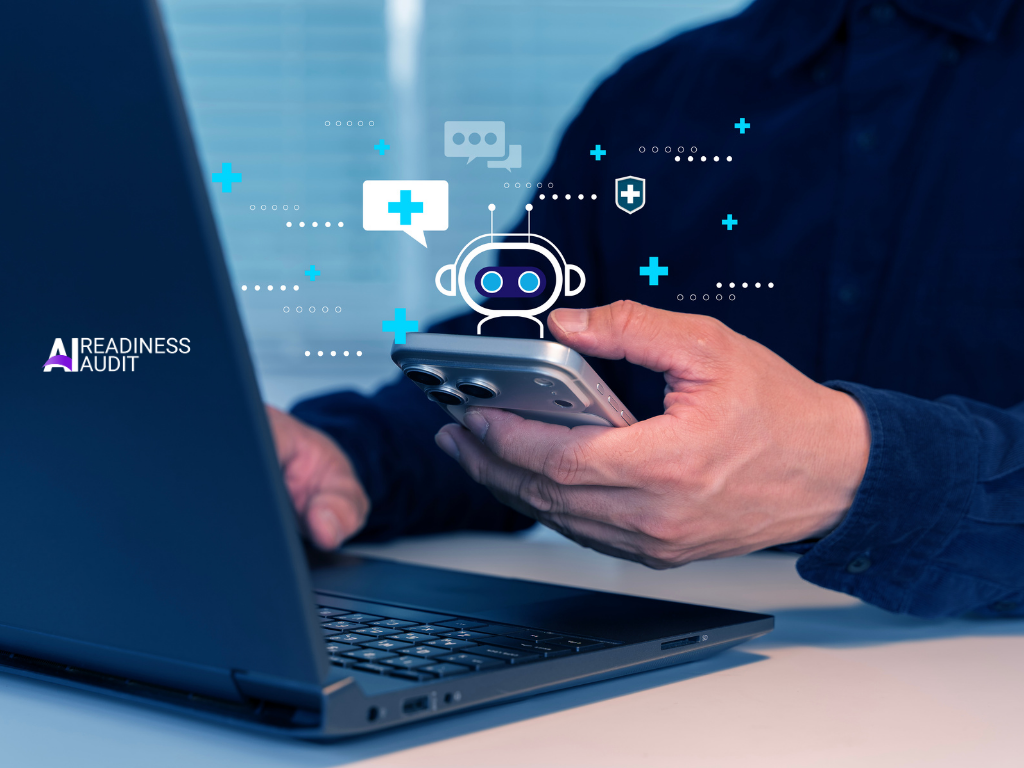
Chat bots can help businesses answer questions, collect inquiry details and direct customers to useful information. However, not every chatbot works in the same way. Some follow a fixed set of rules, while others use artificial intelligence to understand natural language and generate more flexible responses.
The right option depends on what customers ask, how much control the business needs and what should happen when the system cannot provide a reliable answer. Cost, privacy, integration and ongoing maintenance also need to be considered.
This guide compares AI chatbots with traditional chatbots so Australian businesses can decide whether they need a simple automated tool or a more flexible customer-service system.
Common Tasks a Chatbot Can Handle
A chatbot can provide immediate assistance when a customer visits a website. It may answer questions about opening hours, service areas, delivery, appointment availability or the next step in requesting a quote. It can also collect a visitor’s name and contact details before passing the inquiry to an employee.
This can be particularly useful when inquiries arrive outside normal business hours. Instead of leaving visitors to search through several pages, a chatbot can direct them to relevant information or record their details for a later response.
Some systems can also connect with booking platforms, customer relationship management software, email tools and internal support systems. This may allow the chatbot to create a lead, schedule an appointment, send an acknowledgment or direct a request to the appropriate team.
However, a chatbot should not be expected to resolve every inquiry. Its role should be based on a clear customer-service need, such as answering common questions or reducing delays in the initial inquiry process.
Why the Type of Chatbot Matters
A traditional chatbot and an AI chatbot may look similar to a website visitor, but they process questions differently. A traditional system follows instructions written in advance. An AI-assisted system can interpret natural language and may generate a response using approved business information.
That difference affects what the chatbot can answer and how much control the business has over each response. A rule-based system is usually more predictable because its available answers and conversation paths are limited. An AI chatbot is more flexible, but that flexibility requires stronger testing, monitoring and safeguards.
The most advanced option is not automatically the most useful. A small business that only wants to provide opening hours and direct customers to a booking page may not need an AI system. A business receiving varied product, service or support questions may benefit from a system that can understand different wording and use a broader source of information.
How Traditional Rule-Based Chat bots Work
Traditional chatbots use fixed rules to guide a conversation. They may present buttons such as “Request a Quote,” “Book an Appointment” or “Contact Support.” Each selection opens another per-written response or set of choices.
Some rule-based systems also recognize keywords. For example, a customer who enters “opening hours” may receive a prepared answer containing the business’s trading times. If the customer uses unexpected wording, however, the chatbot may not recognize the request.
These systems are often built around decision trees. Each answer leads to another defined step until the customer receives information, reaches a contact form or is directed to an employee. Because the conversation is planned in advance, the business can review exactly what the chatbot is allowed to say.
The limitation is that every supported path must be anticipated and maintained. If services, prices, policies or contact details change, the corresponding responses need to be updated. Questions that fall outside the programmed paths may produce a generic message or no useful answer.
Where a Simple Chatbot May Be Enough
A rule-based chatbot can be suitable when customer questions are predictable and the required answers are short. It may work well for displaying opening hours, listing service categories, linking to a booking system or directing visitors to an existing contact page.
It can also help a business collect consistent information. For example, a trades business may ask whether the visitor needs residential or commercial work, where the property is located and how urgently assistance is required. The chatbot can then send the information to the relevant team.
Traditional chatbots may be preferable when the business needs strict control over every response. This can be useful when inaccurate or loosely worded information could create confusion. Because the system does not generate new answers, there is less risk of it inventing information that was not approved.
A simple system may also be easier to launch and maintain when the number of questions is limited. Before investing in a more complex solution, businesses should check whether a well-designed decision tree can already meet the customer’s main need.
What Makes an AI Chatbot Different?

Understanding Natural Language and Customer Intent
AI chatbots use language-processing technology to interpret what a person is trying to ask. A customer may type “Are you open on Saturday?”, “Can I visit this weekend?” or “What are your weekend hours?” An AI-assisted system may recognize that each question has a similar intent.
This creates a more natural experience because customers do not need to follow an exact menu or use specific keywords. They can describe a problem in their own words and ask follow-up questions within the same conversation.
AI automation can also help categories inquiries. A system may identify whether a message relates to sales, technical support, billing or an existing booking. It can then collect suitable details and direct the inquiry to the correct destination.
Even so, understanding intent does not guarantee that every answer will be accurate. Ambiguous wording, missing context or an unsuitable knowledge source can still produce an incorrect response. Businesses therefore need to define what the chatbot can discuss and when it must stop and request human assistance.
Generating Answers from Approved Knowledge Sources
An AI chatbot can be connected to selected information such as website pages, help articles, service descriptions, product documents or internal support material. When a customer asks a question, the system searches or references that information to prepare a response.
The quality of the answer depends heavily on the quality of the source content. If documents are outdated, contradictory or incomplete, the chatbot may repeat those problems. Before implementation, the business should review its knowledge sources, remove obsolete information and identify which source is authoritative when details conflict.
An AI automation platform may also connect the chatbot with other business systems. Depending on its permissions, it might check appointment availability, retrieve an order status or create a support request. These integration can make the chatbot more useful, but they also increase the importance of access controls and testing.
The chatbot should only receive the information and system access required for its purpose. Sensitive internal documents, customer records and financial information should not be made available simply because they might be useful in rare situations.
AI Chat bots vs Traditional Chat bots: Key Differences
Traditional chatbots offer control and predictability. Their responses are written in advance, so the business can approve the wording before customers see it. However, they may struggle when a customer asks an unexpected question or describes a familiar issue using different words.
AI chatbots provide greater conversational flexibility. They can interpret varied wording, respond to follow-up questions and draw information from a larger knowledge source. This may make them more suitable for businesses with a broad range of products, services or support inquiries.
Accuracy needs to be considered differently for each option. A traditional chatbot is usually accurate within its programmed paths, but it may fail to recognize a valid question. An AI chatbot may understand the question but still produce a response that is incomplete, misleading or unsupported.
Maintenance is required in both cases. Traditional conversation paths must be updated when business details change. AI knowledge sources also need regular review, while generated answers should be monitored for quality. Neither option should be treated as a system that can be launched and then ignored.
Comparing Setup Cost and Technical Requirements
A basic rule-based chatbot can often be configured using an existing website tool. The main work involves identifying common questions, writing approved responses and designing clear conversation paths. Cost may increase when the chatbot needs custom branding, several pathways or integration with other systems.
An AI chatbot can require more preparation. The provider may need to organize knowledge sources, configure system instructions, set access limits, test unusual questions and connect the chatbot with business software. Subscription fees may also vary according to message volume, features and the language model being used.
Custom AI development may be appropriate when standard chatbot software cannot support a required workflow, data source or integration. However, custom development introduces additional design, testing, security and maintenance requirements. It should solve a defined business problem rather than be selected simply because it offers more technical flexibility.
When comparing costs, consider implementation, platform fees, integration, content preparation, staff training and ongoing support. A lower initial price may not represent better value if the system requires frequent manual correction or cannot complete the intended task.
What Happens When a Chatbot Cannot Answer?
Escalating Complex Inquiries to the Right Employee
A useful chatbot should have a clear way to recognize its limits. If it does not understand a question, cannot locate approved information or detects a sensitive issue, it should explain that human help is required.
The handover process should be easy for the customer. Where possible, the chatbot should pass the conversation history and relevant contact details to the employee. This prevents the customer from having to repeat the entire inquiry.
Escalation rules can be based on the topic, customer language or risk level. Complaints, cancellations, payment disputes, urgent requests and complex technical problems may need faster human attention than general information requests.
The customer should also understand whether they are speaking with an automated system and when a person will respond. Clear expectations are more helpful than implying that immediate human assistance is available when it is not.
Keeping Human Review in Important Decisions
Chat bots should not make high-impact decisions without suitable controls. Inquiries involving legal, medical, financial, employment or safety matters may require review by a qualified person. The same applies when a response could significantly affect a customer’s rights, eligibility or access to a service.
Human review is also important when the chatbot uses customer information to recommend an action. The system may help gather details and organize the request, but the final decision may need to remain with an employee.
The Australian Signals Directorate advises small businesses to consider data leaks, unreliable AI output and third-party supply-chain risks when adopting cloud-based AI. Its guidance also recommends human involvement for high-risk uses and careful review of vendor data practices. Businesses can refer to the official AI guidance for small businesses when planning safeguards.
Good human oversight does not remove the value of automation. It places automation where it can save time while keeping judgment and accountability with the appropriate people.
How to Choose the Right Chatbot for Your Business
Start by identifying why customers currently need help. Review common inquiries, response delays, abandoned forms and the questions employees answer repeatedly. This provides a clearer basis for choosing a system than starting with a list of technology features.
A traditional chatbot may be enough when the questions and answers are predictable. An AI chatbot may be more appropriate when customers ask the same question in many different ways, need information from several sources or frequently ask follow-up questions.
Consider the consequences of an incorrect answer. A chatbot that provides a link to the wrong general information creates inconvenience. One that gives incorrect payment, safety or eligibility information could create a more serious problem. Higher-risk uses require tighter controls, restricted topics and stronger human review.
It is also important to consider the customer. Some people prefer typing a direct question, while others find buttons and simple choices easier. The best design may combine both approaches by offering clear menu options alongside natural-language assistance.
Look Beyond Predictive Analytics and AI Features
Technology providers may promote features such as predictive analytics, sentiment detection, personification and automated recommendations. These capabilities can be useful in the right situation, but they should not distract from the main customer-service goal.
A business should first measure whether the chatbot provides accurate answers, reduces unnecessary delays and transfers inquiries correctly. It should also assess whether customers can easily leave the automated conversation and contact a person.
Predictive analytics is different from a standard chatbot function. It uses historical data to estimate possible future outcomes or patterns. A business does not automatically need predictive technology simply because it wants to answer website inquiries.
The right solution is the simplest one that can reliably complete the required task. Additional features should only be included when there is a clear use, suitable data and a practical way to measure whether they improve the result.
Comparing AI Automation Services and Providers
Questions to Ask AI Automation Companies
When comparing ai automation companies, ask how each provider identifies the business problem before recommending a platform. A responsible provider should be able to explain why a traditional or AI-assisted chatbot is appropriate and what limitations will remain.
Ask what information the chatbot will use, where data will be stored and whether submitted information can be used to train third-party models. The provider should also explain user access, conversation records, system permissions and the process for responding to a privacy or security incident.
Testing should cover more than a set of ideal questions. The chatbot needs to be checked against unclear wording, spelling mistakes, unsupported requests, misleading prompts and attempts to obtain restricted information. Ask who will perform this testing and how problems will be recorded and corrected.
It is also helpful to clarify ownership and ongoing responsibilities. Determine who maintains the knowledge sources, reviews conversations, updates integration and responds when the chatbot is unavailable. These details should be understood before choosing ai automation services.
Plan for Testing, Improvement and Ongoing Support
A chatbot should begin with a defined purpose and measurable outcomes. These may include reducing repeated questions, improving initial response times, collecting more complete inquiry details or directing customers to the correct team. The measurement should match the actual service problem.
After launch, review questions the chatbot could not answer, incorrect responses, customer exits and staff escalations. This information can show where conversation paths need improvement or where source content is missing.
Businesses should also schedule regular checks when services, prices, policies or operating processes change. Updating the website without updating the chatbot’s knowledge can create conflicting information.
Before investing in a chatbot or broader ai automation, AI Readiness Audit can help businesses examine their existing inquiry process, identify practical automation opportunities and consider where human review should remain. The aim should be to choose technology based on the workflow and customer need, rather than assuming that every business requires the most advanced option.
If you are comparing a traditional chatbot, an AI automation platform or a more tailored solution, contact AI Readiness Audit to discuss the current process, the systems involved and the result you want to achieve. A clear assessment can help define the requirements before implementation begins.